Ramon

Ramon, photographed at home in Marietta, Georgia, December 2023. All images © Lisa Hancock.
I initially thought of calling this exhibit “Are You My Mother?” like the children’s book by the same name. It recalled a special moment between Ramon and me when he was an 8-year-old foster child at the Catholic Home Bureau. I was a young, inexperienced caseworker and Ramon and his three sisters had been remanded to care because their mother Gloria was addicted to crack and gravely ill. The Cruz children were legend at the agency. They were charismatic, good looking, and their story was particularly tragic. Their father had shot himself in front of the family, leaving 18-year-old Gloria to raise four children by herself. She fell into gang life in the Bronx, becoming addicted to crack, and contracted AIDS. The kids were living in a crack house when her family intervened and dropped the kids off at ACS. When I met them, Gloria had been given three months to live (she would survive until 1997.) Despite being very attached to each other, the kids were too much for one foster family to handle so were dispersed to separate homes.
Their monthly visits with each other at the agency were exuberant. They were like a pack of adorable puppies, energetically acting out stories for each other, bursting into laughter, and showering each other with love and affection. One night bringing Ramon back to his foster home after a visit, he turned to me and asked with a coy grin, “Are you my mother?” I was stunned. He knew I wasn’t his mother. But it tugged at my maternal heart strings. I did the calculations: could I possibly adopt him? No. I was 23 years old, single, and not ready for parenthood by a long shot. I’ve since learned that Ramon always wondered why nobody seemed to want him. His mother only seemed to want to see him when she was in the hospital or prison. His long-term foster family took no steps to adopt him. And his grandparents, aunts and uncles on both sides had long ago relinquished him and his sisters to the system. Ramon was very much the abandoned baby bird in the storybook wandering from place to place asking, “Are you my mother?”

“Hope to be all together soon.” A family visit at the Catholic Home Bureau, May 28, 1991, to celebrate Ramon’s birthday. That’s me on the far left, the impossibly young caseworker with my eyes closed (in more ways than one, it would turn out). To my left is Gloria, Ramon’s natural mother and her boyfriend. Ramon is on her lap. In the back from L to R is Lizzie, the oldest child, her boyfriend, and Janet on the right. Their other sister Jessie, living on Staten Island, was unable to attend that day.

Ramon’s school picture taken while he was in foster care. He attended a Catholic school in the Bronx where his foster family lived.
Ramon stayed with the same foster family for most of his childhood. I remember thinking he was in one of our best homes. His foster mother seemed responsible, well trained, and caring. But Ramon recently confided in me that she physically abused him and the other foster children in her care on a regular basis. He was subjected to extreme corporal punishment for years. He showed me scars. There was also emotional neglect. At Christmas, she would shower her biological children with gifts and give nothing to the foster children. Birthdays went unacknowledged. When he finally became old enough to fight back and felt the impulse to strike her, he ran away. He lived on the street for years. When I first reconnected with him in 2007, unbeknownst to me he was still living on the street, stealing cars to survive.
When his older sister Janet moved to Atlanta in search of affordable housing and jobs, he followed her. He credits the move with getting him away from bad influences and helping him to start over again. He now has a steady job as an insurance adjuster and lives in the suburbs with his girlfriend, their young daughter, and her two sons from another relationship. While he’s come a long way, he’s still unpacking the emotional trauma from his childhood. He suffers from debilitating anxiety attacks, which he says have landed him in the hospital on a number of occasions.
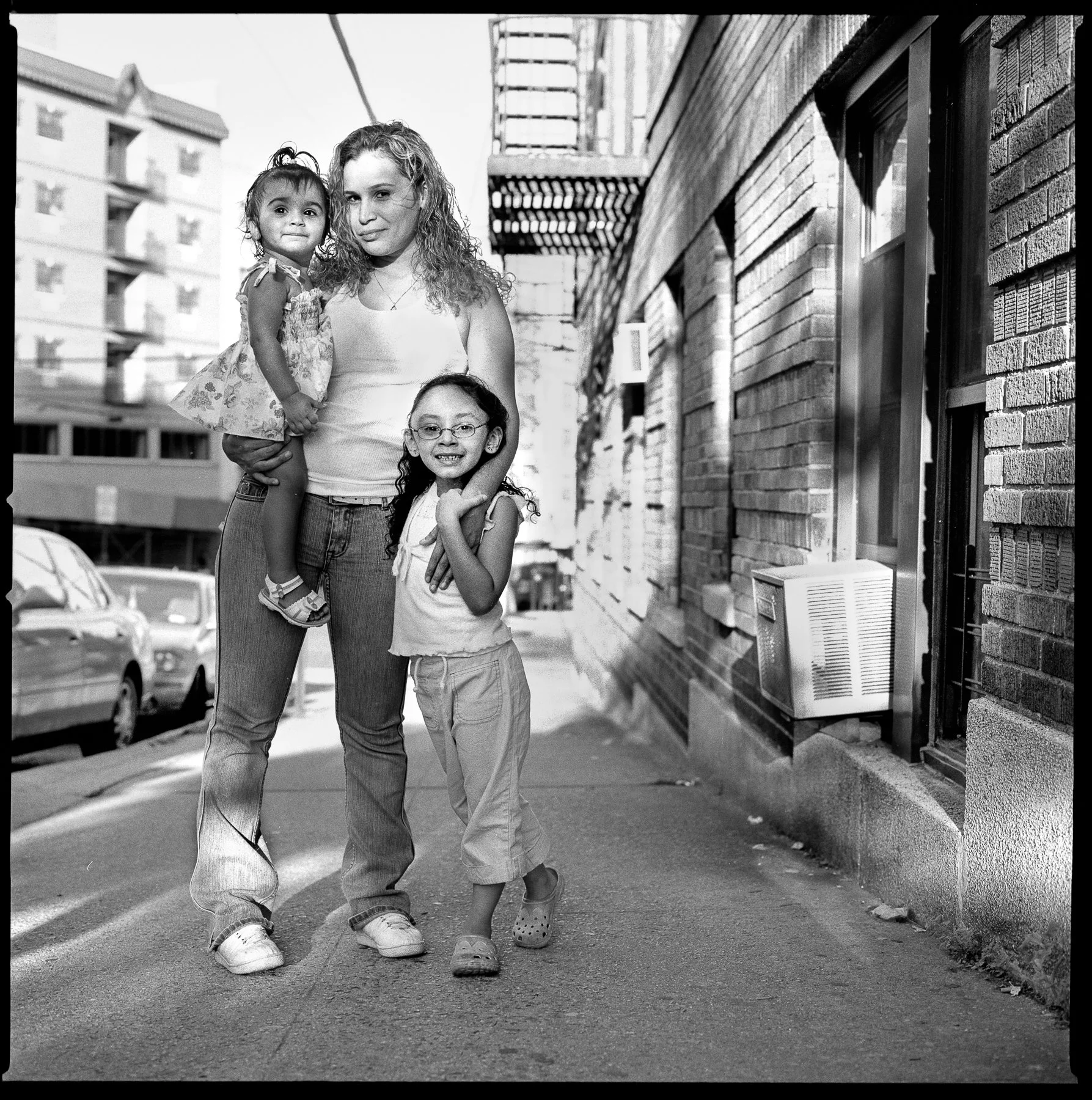
Ramon’s sister Jessie, pictured here in 2007 with two of her daughters, now lives in Pennsylvania with her husband and four children. Like her siblings’, Jessie’s resilience is remarkable. She and her sisters were sexually abused by their father before he killed himself. And, like Ramon, she spent her entire childhood in foster homes, never getting adopted and never knowing if she would go back to her natural mother, as Gloria’s illness dragged on. Yet Jessie appears to have broken the cycle. None of her children have had to go into foster care. She’s created the family she never had as a child.